Digital Revitalization of Museums for Friendship
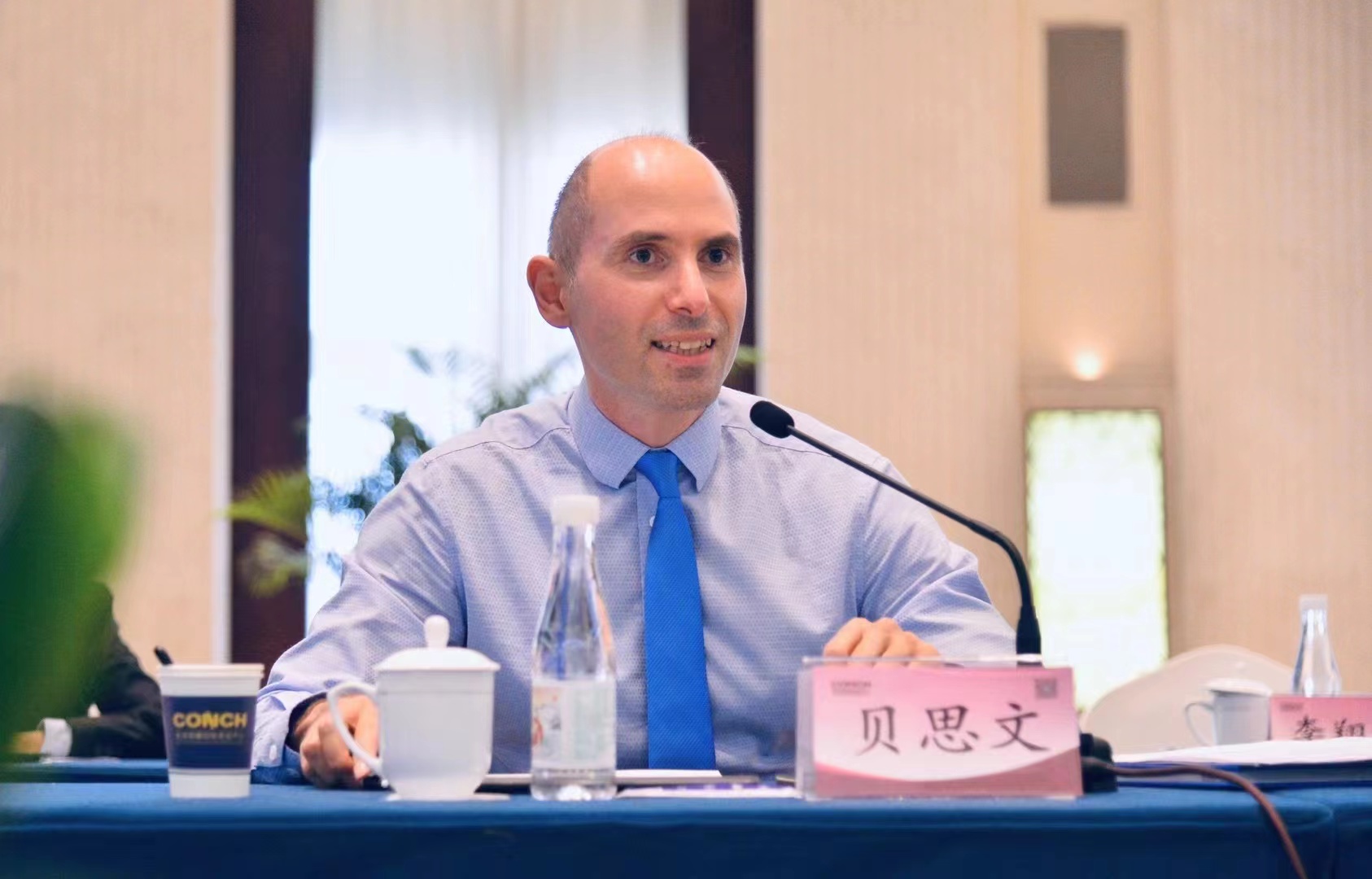
Steven Back.?(COURTESY?PHOTO)
By BI Weizi and LONG Yun
As the representative of the Hungarian National Museum in China, Steven Back, did his master's degree in computer science in Hungary. Then he switched to social psychology for his doctorate in the Netherlands. Today he excels in the field of museum digitalization.
Inherited interest
"My grandmother used to collect porcelain, especially blue and white porcelain, and my father is also a collector and historian. I grew up surrounded by old books, old engravings and antiques," he said. The love for china ignited his interest in China, the first country in the world to invent porcelain.
In the late 1980s, many cultural relics, including the famous Terracotta Warriors and horses were exhibited in the National Museum in Budapest, the capital of Hungary. This exhibition is one of Back's fondest memories. "Hungary was one of the first countries to invite the exhibition of the Terracotta Warriors and horses. I felt that the whole country was paying attention to this cultural exchange event," he said.
Although Back's determination to pursue a career in museums was a challenging path, his creative combination of computer science and exhibitions proved to be a great success, bringing tangible benefits to museum development.
Digitalization empowers museums
In 2014, Back and his team developed and patented the "Magic Wall" technology with fully independent intellectual property rights. It has been widely used in various events at the China National Museum, the National Gallery of Hungary, the Shanghai Science and Technology Museum, and the China International Import Expo.
Magic Wall is an interactive display wall product that combines real-life modeling with multimedia content. It is mainly composed of high-resolution industrial monitors, high-resolution image processing parts, large servers, and customized large-scale touch sensitivity. When visitors touch and interact with the wall, the static modeling wall displays graphic content, video introductions, 3D models, etc., which enhances visitors' interest and exploration experience in museums.
Back said that digitalization is a major trend in exhibitions and has a positive impact on the museum and education industry. "The museum industry on the one hand has an intrinsic need for digitization to preserve ancient artifacts, digitization on the other hand empowers the museum in cultural exhibitions, history education as well as information dissemination," he said.
Going to museums used to be considered a passive experience. A quick look at artifacts that take you back thousands of years with some details is far from enough. What Back is trying to do is to empower museums to narrow the gap between the present and the past, and shorten the distance between China and Hungary with digital technology.
Museums Strengthen Friendship
Over the years, Back has participated in many cultural exchange activities between China and Hungary. In 2015, the "Chinese Treasures Exhibition" was held in Budapest, co-organized by the China Cultural Relics Exchange Center and the Hungarian Museum of Arts and Crafts. The exhibition displayed more than a hundred precious cultural relics, including pottery, bronze, jade, porcelain, gold and silverware from the Neolithic period to the Ming and Qing dynasties. It received a warm welcome from Hungarians.
In 2017, Buck introduced a major exhibition in the Shanghai Museum titled "Sissi and Hungary - Hungarian Noble Life from the 17th to the 19th Century," which featured 149 cultural relics from past dynasties collected by the Hungarian National Museum. "I didn't expect the Chinese public to be so interested in Hungarian culture," he said, adding that he was positively surprised by the number of people who came to see the exhibition.
For his outstanding contribution to cultural exchange and innovative technologies, Back was awarded the Shanghai "Magnolia Memorial Award" in 2020.
According to him, museums play an important role in promoting not only cultural exchanges but also mutual understanding and friendship between people. "People at all times have more in common than differences. So do countries. We can discover similarities through the differences between cultures and between different time periods," he said.
Back hopes to promote more cultural exhibition exchanges between China and Hungary in the future.