Chinese Sci-tech Contributes to Solving Global Challenges
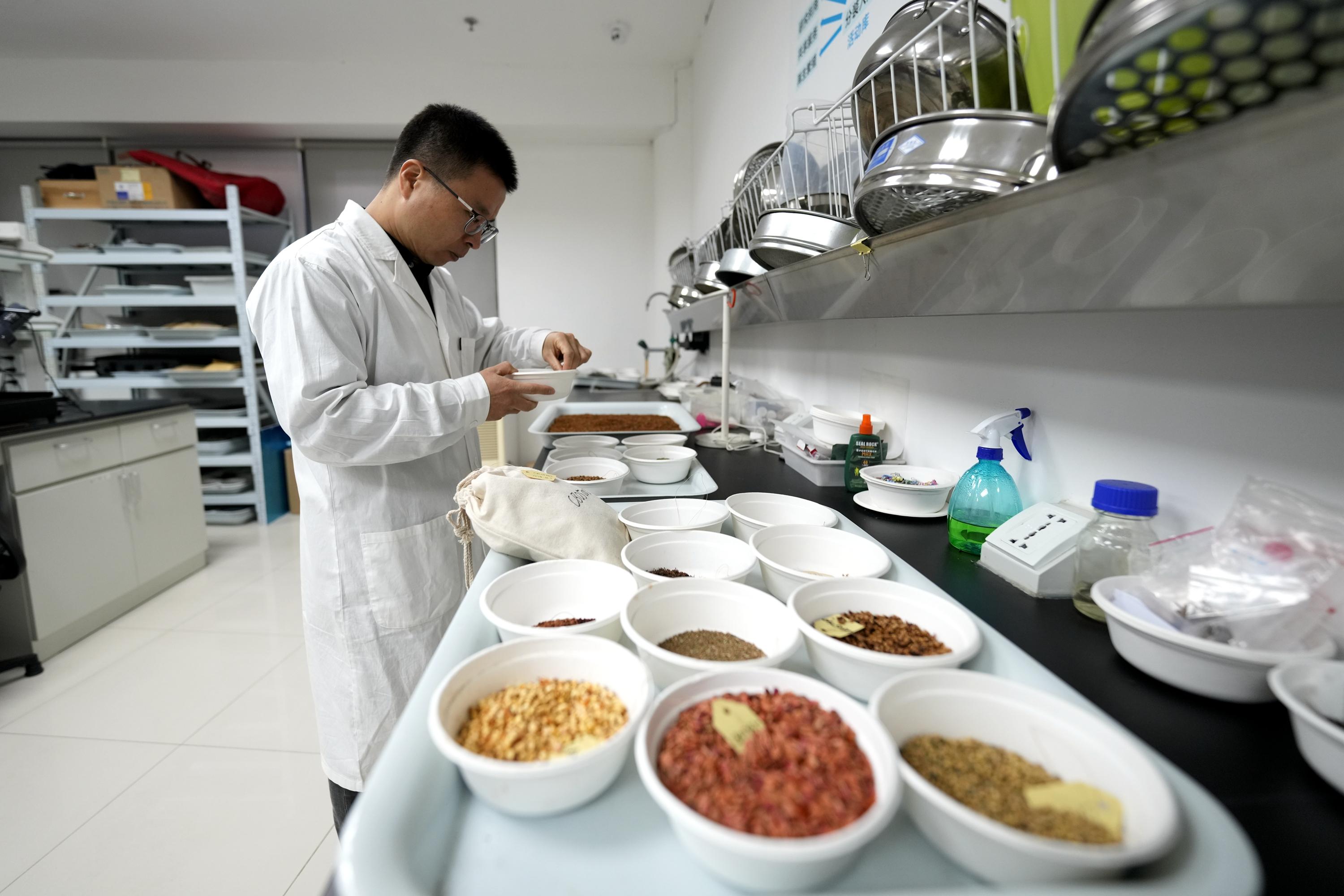
China's sci-tech innovation has topped a recent series of prestigious lists, injecting new vitality into the global quest for sustainable development.
Taking into account scientific research cities, disciplinary contributions, and international leadership, China's "meteoric rise" in research capabilities augers well for the international research ecosystem.
The advance of Chinese research cities
According to Nature Index 2025 Science Cities supplement, six Chinese cities are among the world's top 10 scientific research hubs. Data shows that Beijing has topped the list for nine consecutive years, while Shanghai, Guangzhou, Wuhan, Nanjing and Hangzhou have all made it into the top 10. China has historically held the majority of the list's top 10 global scientific research cities.
On the Global Innovation Index 2025, published by the World Intellectual Property Organization, China has become one of the top 10 most innovative economies in the world for the first time, and it ranks first in the world in many sub-indicators related to intellectual property rights. Meanwhile, "Shenzhen-Hong Kong-Guangzhou" ranked first globally as a sci-tech cluster.
In terms of the key indicator contribution share, Chinese cities have demonstrated a strong growth momentum. Data shows that the research output in Beijing increased by over nine percent between 2023 and 2024, while Shanghai's grew by 20 percent.
The research output of other Chinese cities in the Nature Index top 10 list also rose, with a commentary pointing out that these changes in rankings reflect "a broader trend that China is expanding its leading edge."
Moreover, in terms of disciplines, the Nature Index shows that Chinese cities continue to dominate the lists in the fields of chemistry, physical sciences, and earth and environmental sciences.
Chinese scientific researchers making their mark
The development of scientific research cities in China cannot be separated from the tireless research capabilities of scientists. Against the backdrop of an overall increase in scientific research output, the international influence of Chinese scientists has also continued to grow.
A recent study published in the Proceedings of the National Academy of Sciences (PNAS) highlights this structural shift. Data shows that Chinese scientists now lead more than half of all joint research projects with peers in the UK, with similar leadership patterns emerging in collaborations with partners in the U.S. and Europe.
Analysis by the Swedish Foundation for International Cooperation in Research and Higher Education offers further validation. Its November report noted that when ranked by high-impact publications, rather than total volume, China has surpassed the U.S. in research strength, particularly in mathematics, computing and engineering.
"I have witnessed first-hand the developments that have led to what many may find a surprising, even shocking, development," said Erik Forsberg, the report's author, referring to the rapid evolution of China's academic capabilities over the past two decades.
Chinese research aiding global sustainable development
The academic achievements of Chinese research have been increasingly applied in policy-making, especially in the sustainable development fields.
A recent global report released by Springer Nature, a world-renowned scientific publishing organization, shows that China is the largest contributor to papers related to the Sustainable Development Goals (SDGs). Chinese scientific achievements are playing an increasingly important role in the formulation of global SDG policies.
China's SDG-related research findings have been widely cited in various SDG policy documents, with 25 percent of citations coming from international organizations such as the World Health Organization. Since 2022, the impact of Chinese SDG-related papers on global health and environmental policy documents has been particularly significant, the report said.
"China's research results are widely cited across different countries," said Nicola Jones, director of the SDG Programme at Springer Nature, highlighting the global utility of Chinese scientific output.
This aligns with a broader trend noted by Nature Editor-in-Chief Magdalena Skipper. Skipper observed that while scientific research is a global endeavour, China is making an increasingly influential contribution to the global research ecosystem across multiple metrics.