Guidelines to Boost 'AI+' in Healthcare and Medical Services
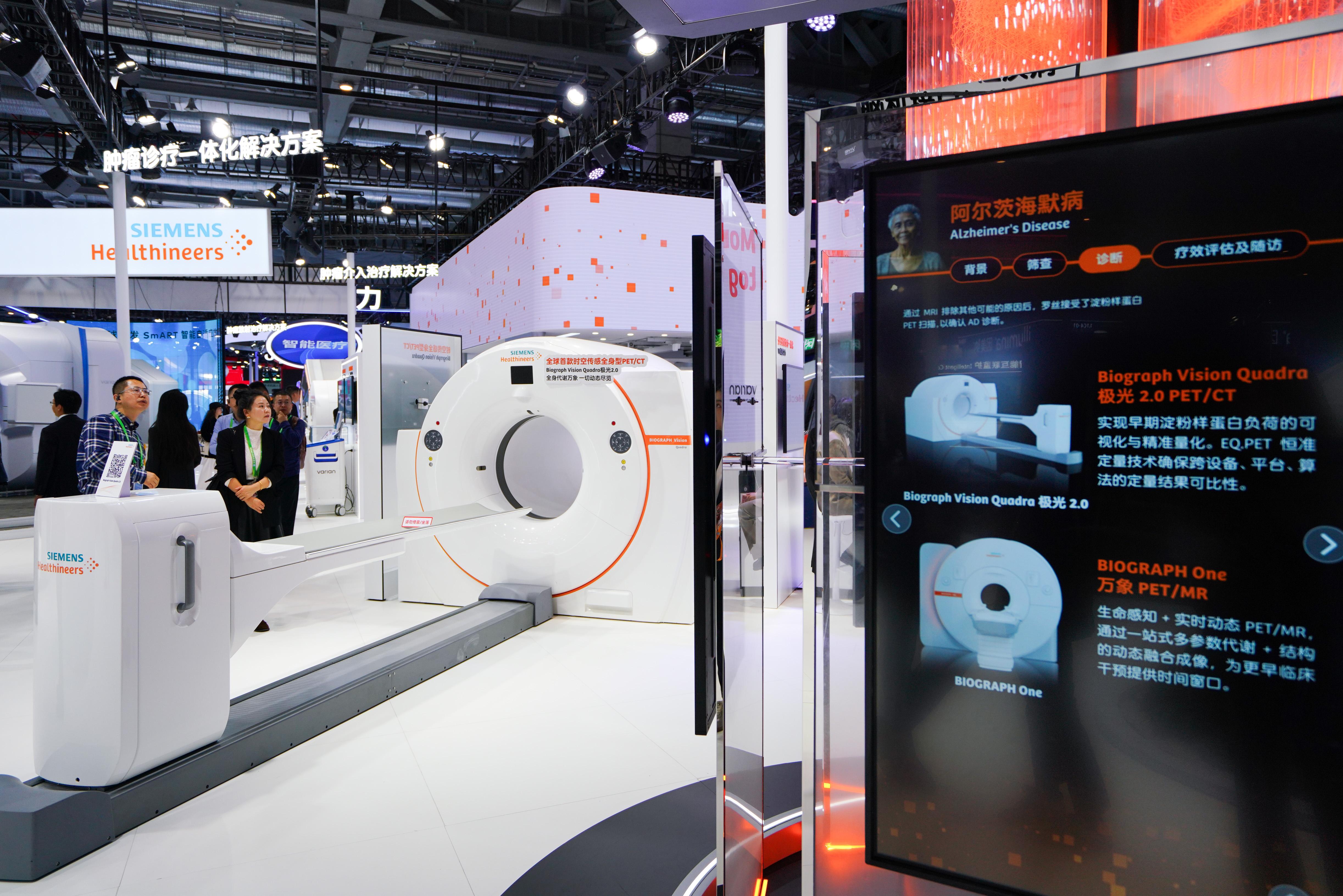
A new strategic initiative designs the integration of AI into the healthcare sector to enhance the quality and efficiency of healthcare services while ensuring safety and accessibility for the public.
The recently released document on promoting and regulating the application of AI+ in healthcare and medical services aligns with the broader goals set forth by the Chinese government in the national AI development plans.
The policy sets an ambitious roadmap with key objectives for the years 2027 and 2030.
By 2027, China plans to establish comprehensive healthcare data sets and trusted data spaces, alongside the creation of specialized AI models for clinical diagnostics and treatment decisions. Widespread implementation of AI will be targeted across primary care, specialized clinical decision-making, and patient services, marking a significant leap toward fully integrated, AI-driven healthcare services.
By 2030, AI technologies are expected to be fully embedded in medical imaging, diagnostic tools, decision support systems, and patient care, ensuring that secondary and tertiary hospitals across China adopt these innovations.
A primary focus of the policy is the enhancement of AI applications in primary healthcare. These include improving diagnostic accuracy in medical imaging and laboratory diagnostics, alongside the development of AI systems for chronic disease management and personal health monitoring.
AI tools will also be used to improve the quality and efficiency of public health services, such as routine screenings and health management for vulnerable populations. Through these initiatives, the policy aims to bridge gaps in healthcare access, particularly in rural and underserved areas, where AI can support more efficient delivery of care.
In clinical settings, the policy encourages the use of AI in medical imaging and decision support systems, particularly in specialized areas such as oncology, pediatrics, and mental health. AI applications will aid healthcare professionals in diagnosing complex conditions and managing rare diseases, significantly improving the quality of clinical decision-making and patient outcomes.
The policy also outlines the expansion of AI-driven rehabilitation and personalized treatment options, reflecting a comprehensive approach to patient care across various stages of illness and recovery.
Another key aspect of the policy is the integration of AI with traditional Chinese medicine (TCM). The initiative proposes the development of AI tools that will assist in TCM diagnostics and treatment planning, leveraging vast repositories of historical data and clinical research to enhance the personalization of care based on TCM principles.
To support these efforts, the policy emphasizes the need for robust infrastructure and data-sharing mechanisms. It calls for the construction of a national health information platform that will allow seamless data exchange across public and private healthcare institutions. This platform will serve as the backbone for AI-driven applications, ensuring that medical professionals have access to the most up-to-date and comprehensive patient information.
Additionally, the policy advocates for the development of more powerful AI algorithms and computing capabilities, which are critical for the widespread deployment of AI applications in the healthcare sector.
Data security and privacy are paramount in the policy's design. To protect patient information and maintain public trust, comprehensive guidelines have been drafted for the secure use of healthcare data. Oversight mechanisms have also been introduced to monitor the ethical and legal use of AI technologies, ensuring that they comply with the national and international standards for data protection and privacy.
Through this initiative, China aims not only to advance the domestic healthcare system but also to position itself as a global leader in AI-driven healthcare innovation. The integration of AI technologies will facilitate more efficient, accurate, and equitable healthcare delivery, while also fostering growth in the broader health technology sector.