Science can Empower Global South
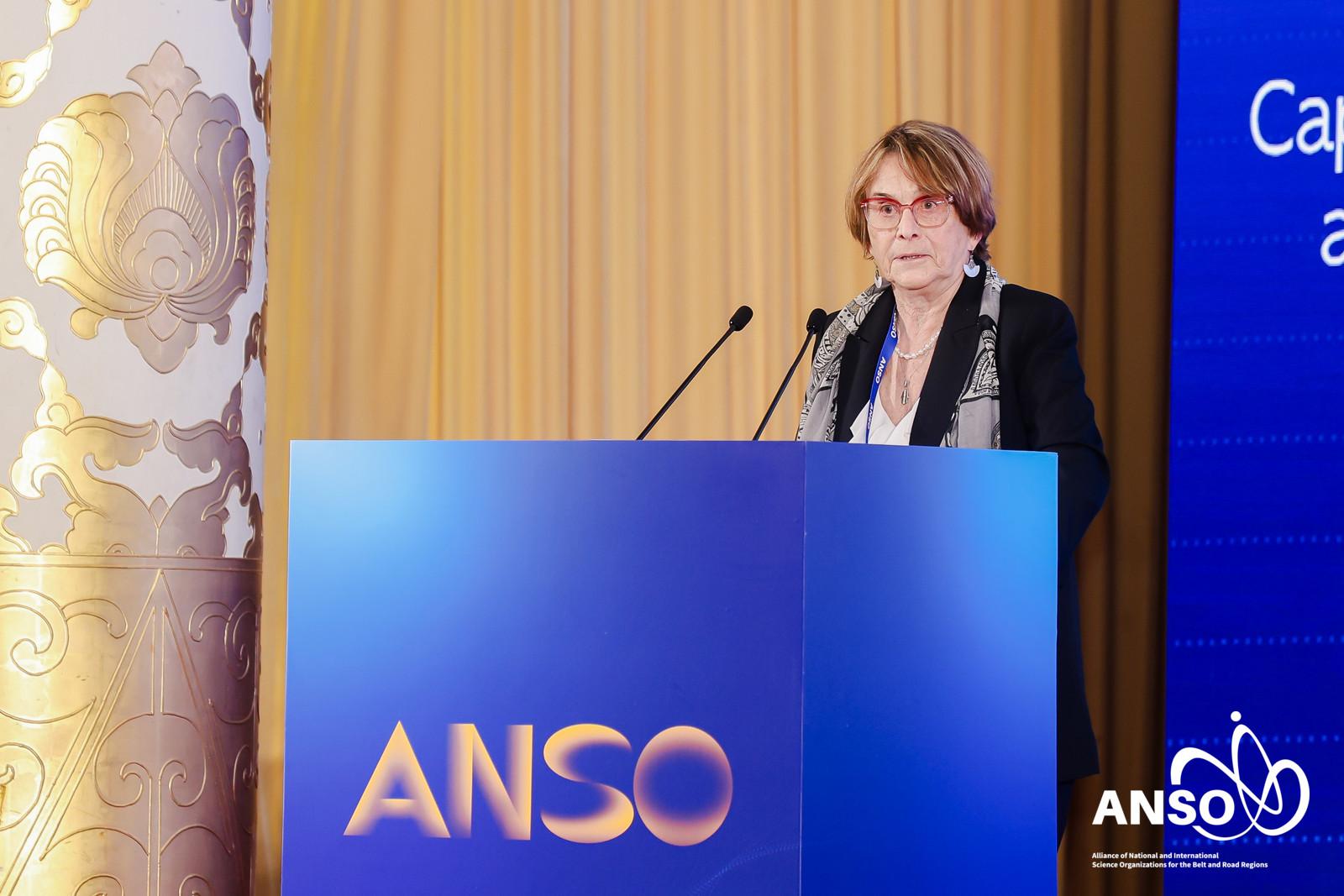
"Global cooperation is not a luxury. It is a necessity. It is through dialogue, trust and shared scientific work that we can build bridges and create solutions that leave no one behind.” This powerful message is part of the speech given by Brazilian scientist Professor Helena B. Nader at the 2025 General Conference of Alliance of National and International Science Organizations for the Belt and Road Regions (ANSO) on Science and Innovation 2025, which opened in Beijing on October 28.
Nader is the president of the Brazilian Academy of Sciences (ABC) and the first woman to hold that role in its history. She is vice president of ANSO at that time. As a biochemist by training, she has spent her career in research and teaching at the Federal University of S?o Paulo (UNIFESP), while actively pushing for greater inclusion in science, especially for women and Afro-Brazilian researchers. Her words in Beijing were not new. They reflect a belief she has long held: science works best when it is open, collaborative and grounded in real human needs.
Fighting for equity within sci-tech community
Nader's journey to the pinnacle of scientific leadership began with a deep commitment to justice and inclusion. When she assumed office as president of the Brazilian Academy of Sciences in May 2022, she brought with her a clear mission: to make science more representative of the society it serves. Her inaugural speech set the tone, emphasizing gender, racial and ethnic equity within the scientific community.
Reflecting on her historic role as the first female president of the ABC, Nader told Science and Technology Daily, “[Throughout] my whole life I fought for equity and for the equilibrium of gender. So when I became [president], it wasn't planned. It was a consequence of my performance and presence in the academy."
Under her leadership, the ABC has made significant strides in increasing female representation among its members. Today, nearly 25 percent of full members are women, a marked improvement from previous decades.
However, she is quick to point out that progress remains uneven. "We have a problem in terms of equity," she admitted. "Brazil's population is half made up of people of African descent, mixed race, or indigenous backgrounds. But in our academy, we see very little representation from these groups."
Nader does not just care about numbers, and sees diversity not as a checkbox but as a scientific imperative. "When people with different backgrounds, cultures and life experiences join research, we ask better questions and come up with more meaningful solutions," she said.
South-South cooperation needed
As vice president of ANSO, Nader plays a pivotal role in shaping a new era of international scientific collaboration. Since its inception, ANSO has grown into a dynamic network connecting about 80 science organizations across Asia, Africa, the Middle East and Latin America. For Nader, this platform represents a powerful opportunity to shift the center of gravity in global science.
"I am deeply aware of how important ANSO has become in just a few years," she observed. "It connects scientists, institutions and policymakers across continents and cultures. Our strength lies in our diversity. We are united by a shared commitment to advancing science for the benefit of all humankind."
She highlighted the urgency of the recent conference's theme "Science and Innovation for a Sustainable Future" as a call to action. But she also pointed to a critical gap. While ANSO has strengthened collaboration between Asian and African nations, engagement with Latin America and the Caribbean remains limited.
Nader is determined to bridge this divide. "I'm going to work harder on increasing collaboration between ANSO and Latin American countries," she affirmed. By pooling resources, knowledge and expertise, nations in the Global South can tackle shared challenges from biodiversity loss to sustainable agriculture on their own terms, without relying solely on traditional Northern partners.
This shift, she argued, requires a change in mindset, especially among young researchers. "In my time, collaboration meant going North, like the U.S. or Europe, but today we must encourage young scientists to look South, to build partnerships across the Global South. I think we should not take this geopolitical crisis as a barrier, but an advantage to increase South-South collaboration."
The joy of being a scientist
Beyond her leadership roles, Nader remains deeply connected to her role in the laboratory. As a professor at UNIFESP, where she earned her PhD and conducted groundbreaking research in biochemistry, she continues to mentor students and lead research projects. "I love being a scientist. I really do," she said with genuine happiness.
Even as an administrative leader, she makes time for the lab. "I still have graduate and undergraduate students working with me. Being around young minds, seeing their curiosity and passion is the best part of my life, besides my children." This hands-on engagement keeps her grounded and reminds her why science matters.
"Science is amazing. Choose it because you're going to have fun and you're going to be very happy." She described research as a uniquely empowering profession: "You are your own boss. You design your experiments, choose your methods and follow your curiosity. It's fantastic."
She emphasized the importance of mentorship and opportunity. "We need more youth in science. I think it's most relevant to support students with real research experience. That's how talent grows."