A Pioneer in Computational Chemistry
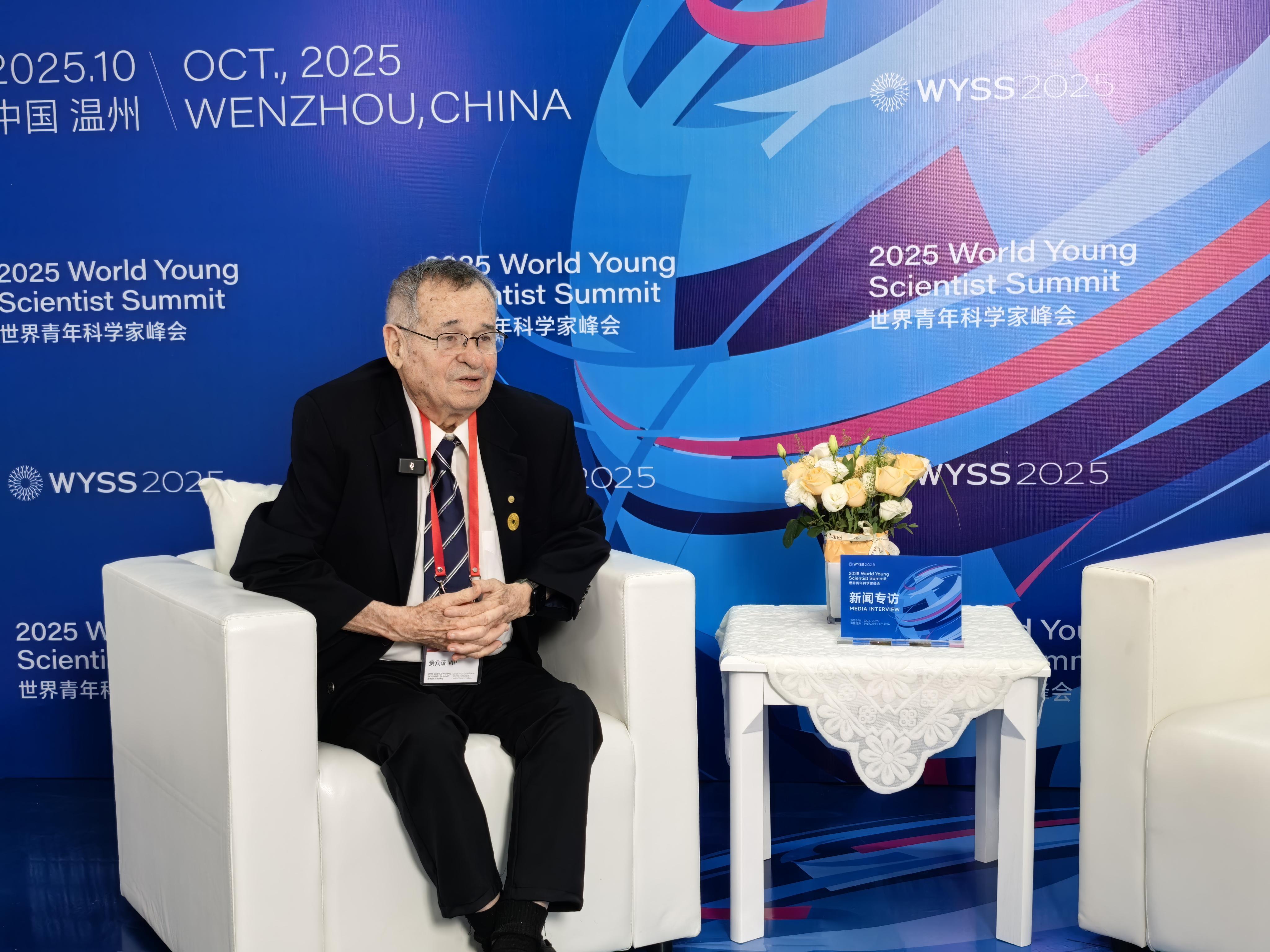
Professor Arieh Warshel, Nobel laureate in chemistry in 2013, is widely recognized as one of the founding figures of computational chemistry. Together with Martin Karplus and Michael Levitt, he developed the groundbreaking "multiscale model," a revolutionary approach that enabled accurate simulations of complex biological molecules, leading from chemistry and biology to drug discovery.
In a recent interview with Science and Technology Daily, Warshel, now 85, reflected on the beginnings of his scientific career, sharing his insights on international collaboration, AI, and the path ahead for young researchers.
Convergence of luck and passion
Warshel attributed his path to computational chemistry to both personal passion and fortunate circumstances. His pioneering research began in the late 1960s and early 1970s, when computers were still primitive. During this period, he created methods and programs to simulate the behavior of biological molecules through multiscale models and paved the way for advances including new pharmaceuticals.
"I became fascinated by enzymes during my undergraduate studies," he said. "I wanted to understand how these biological catalysts work at the molecular level."
A pivotal moment came while doing his PhD at the Weizmann Institute of Science in Israel. Though his supervisor had never used a computer himself, he encouraged Warshel to explore computational approaches for studying molecular systems, and the institute happened to house one of the most advanced computers of the era.
"Earlier, during a summer job, I used a mechanical calculator to process large sets of numbers. That experience taught me the potential of automation," Warshel shared.
This combination of scientific curiosity and early access to emerging technology positioned him among the first scientists to apply computing power to simulate biological molecules, laying the foundation for modern computational biochemistry.
Science without borders
A strong advocate for global scientific cooperation, Warshel emphasized that shared scientific interests form the cornerstone of successful collaboration.
"Collaboration brings diversity of expertise, access to different resources, and fresh perspectives," he remarked. "Today, with tools like Zoom and email, working across continents has never been easier."
He has observed remarkable progress in China's scientific landscape: "The advancement is huge, the pace is fast, and I believe this progress will continue."
He added, "In certain fields, especially AI, Chinese researchers are not just catching up, they are leading the way."
Several members of his research team are Chinese scientists who have made outstanding contributions.
In 2017, the Warshel Institute for Computational Biology was established at The Chinese University of Hong Kong, Shenzhen, the university's first research laboratory founded by a Nobel laureate.
Warshel envisions it as a platform for global researchers to collaborate and make impactful contributions, a hub for major international projects, and a multidisciplinary education center nurturing the next generation of computational biologists.
Embracing AI with understanding
On AI's role in science, Warshel was both enthusiastic and cautious: "AI is incredibly powerful. It finds patterns and correlations, sometimes delivering astonishingly accurate predictions. I am using it in my own research on biological molecules."
However, he cautioned that "AI does not provide physical understanding. It tells you what happens, but not necessarily why. Do not shy away from AI. Embrace it, but never stop striving to understand the science behind the results."
He urged maintaining strong foundations in physically-based modeling: "There will always be a need to interpret what AI tells you. That requires deep knowledge, not just technical skill."
To aspiring researchers, Warshel's advice is: "Choose hard problems, the kind that if solved, will have real impact." He warned against playing it safe, noting that many important breakthroughs take decades to be recognized. His own work took over 20 years to gain full appreciation.
"Patience and persistence are essential. There will be setbacks. But if you believe in your direction, keep pushing forward. Science is not a sprint. It is a marathon," he added.
More than four decades after beginning his journey with a hand calculator and a dream to understand enzymes, Warshel remains deeply engaged in science and committed to nurturing the next generation. His message is clear: Pursue meaningful questions, collaborate across borders, harness new technologies wisely, and above all, persevere.
Xiang Yu also contributed to this article.