Macro Potential of Micro Nanotechnology
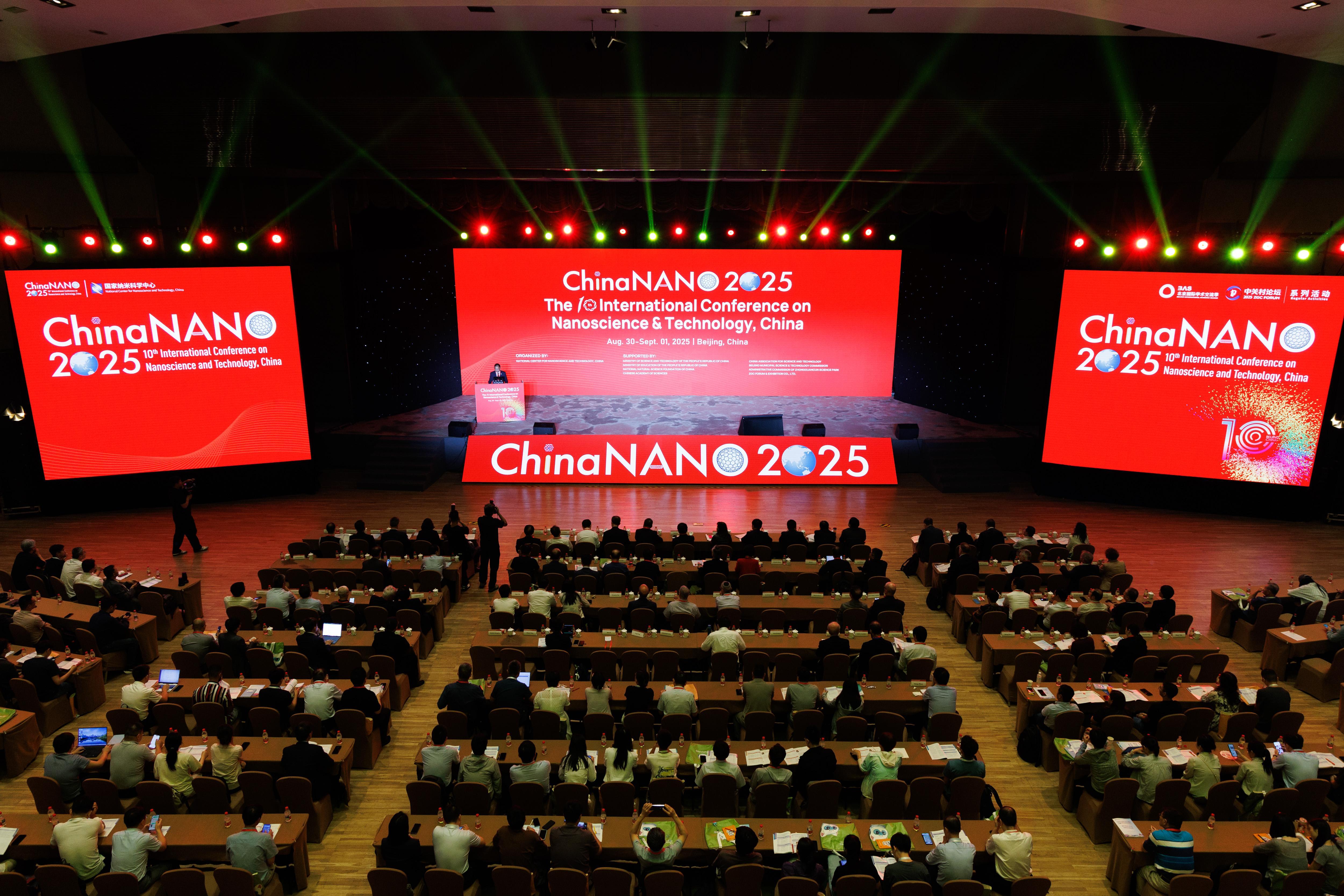
"Nanotechnology is a driving force behind breakthroughs in strategic areas such as green energy, biomedicine and information technology, accelerating the formation of new quality productive forces," said Bai Chunli, Academician of the Chinese Academy of Sciences and Chair of the ChinaNANO 2025 Conference.
Speaking at the conference launch on August 30, Bai said that China has become a major contributor to global nanotechnology and a leader in cutting-edge industries. The rise of artificial intelligence has brought revolutionary opportunities to the field of nanoscience and is profoundly reshaping its research paradigm, he added.
Founded in 2005, ChinaNANO is an international conference held biennially that has grown into a major platform for sharing global nanoscience knowledge and stimulate collaboration. During the conference, Science and Technology Daily spoke with several domestic and international experts about the rapid development of nanotechnology in China and its prospective wide range of applications.
China leads global nano patents count
The China Nanotechnology Industry White Paper (2025), which was released at the conference, shows that China is leading the way in nanotechnology patents and that the industry continues to grow. From 2000 to 2025, the total number of authorised nanotechnology patents worldwide exceeded 1.078 million, 464,000 of which were from China, ranking it first in the world.
Dr Matteo Cavalleri, Publisher, Portfolio Strategy at AIP Publishing, said China's rise to the top in nanotechnology patents reflects the success of China's scientific research transformation paradigm. It demonstrates China's commitment to valuing the quality and quantity of scientific research and reveals the commitment of the Chinese government and scientists to basic scientific research, he said.
Interdisciplinary research key to advance nanotechnology
According to Bai Chunli, innovations in cutting-edge fields often emerge from the intersection of disciplines. "It isn't a single, isolated discipline, but is intertwined with physics, chemistry, materials science, electronics, life sciences and more," said Bai.
Professor Monica Lira-Cantu, full professor and group leader Nanostructured Materials for Photovoltaic Energy at ICN2, Barcelona, echoed Bai's sentiments, emphasising the indispensable role of interdisciplinary collaboration in stimulating innovative ideas and advancing innovative products. As an expert in nanostructured materials and photovoltaic energy, Lira-Cantu used artificial retinal lenses as an example to demonstrate the important role of interdisciplinary research in solving practical problems.
When light enters the eye, it passes through the cornea and lens, focusing on the retina. This process converts the light signal into neural signals and transmits them to the brain for processing. The retina is like a high-tech 'photosensitive film', and its 'light sensors' are crucial, she said. These cells are specifically responsible for sensing light intensity and colour. Without these cells, we would be unable to see. While optics experts are solely responsible for collecting the light, biomaterials experts then take control, inventing functional contact lenses that bring numerous benefits to humanity.
Nanotechnology's promising future
According to the China Nanotechnology Industry White Paper (2025), the global nanotechnology market is expected to reach \$1.5 trillion by the end of 2025, with an estimated compound annual growth rate of over 17 percent between 2018 and 2025. China's nanotechnology patent transfer and licensing rate has exceeded 8 percent, and the efficiency of technology transfer continues to improve. In the future, more nanotechnology is expected to move from the laboratory to industrialisation, and its applications are diverse and numerous.
Professor Wang Bo, vice president of the Beijing Institute of Technology and Editor-in-Chief of APL Materials, believes that nanotechnology holds great promise for the future, notably through the application of novel nanoporous materials and biomimetic open frameworks in fields such as biomedicine and energy.
Examples include precision drug delivery "nanorobots" that help to overcome difficult diseases, efficient energy conversion nanomaterials that promote the widespread use of clean energy, and flexible nanoelectronics that enable wearable devices to achieve greater functionality. With its micro power able to impact the macro world, nanotechnology will continue to expand, providing unending momentum for building a smarter, greener and healthier future society and turning what was once "impossible" into a "real reality" that benefits people everywhere.