Chinese Scientists' Devotion under War Fire
By Staff Reporters
During the Chinese People's War of Resistance Against Japanese Aggression, Chinese scientists devoted themselves to national salvation with science and technology as their weapon, achieving remarkable feats in communication technology, agriculture, people's livelihood and basic science.
Breakthroughs amid war
It was the philosophy of Yan Jici, one of the founders of modern physics in China, that without science, a country cannot survive. Yan organized the arduous relocation of the Institute of Physics from Beijing to Kunming in southwest China, and focused on optics research and production, as optical equipment was much needed in military communication and medical instruments.
Under his leadership and aided by physicist Qian Linzhao, the Institute of Physics manufactured hundreds of high-powered microscopes, crystal oscillators, military rangefinders and telescopes and other equipment. They also invented a new radio transmitter frequency stabilizer, which greatly improved wartime telecommunications.
In Leshan, Sichuan province in the southwest, chemist Hou Debang developed a new method to make soda, replacing the costly Solvay process. Hou's innovation reduced the required paraphernalia by one-third and lowered the cost by 40 percent. It increased the salt utilization rate to 96 percent, and at the same time converted production waste into fertilizer.
This breakthrough contributed to the growth of industry and livelihoods during wartime, and offered the world a new way of soda ash production.
Safeguarding people's wellbeing
Zhou Yao, a founding father of Chinese entomology, pioneered the biological pest control method of "using insects to control insects." He used parasitic wasps to subdue the wheat midge, a formidable wheat pest, and saved tens of millions tons of wheat in the Yellow River Basin.
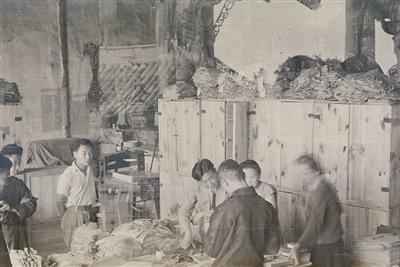
During the war, the Shaanxi-Gansu-Ningxia region, which had a weak industrial foundation, lacked daily necessities. Qian Zhidao, a chemist, went to Yan'an in Shaanxi to build the Zifanggou Chemical Factory. The factory produced bullets and grenades as well as matches and soy sauce to meet the daily need of the locked-down area.
China faced severe challenges in the medical and health sector as well. To conquer the crisis, scientists stepped forward. Medical virologist Tang Feifan conducted research on vaccines and sera, and developed the typhoid vaccine.
Agronomist Luo Dengyi discovered that the rose hip, a wild fruit in Guizhou in southwest China, had a high vitamin C content. He promoted the use of the rose hip as a substitute for vitamins to address the nutritional deficiency among the people.
Precious spiritual heritage
From Hangzhou in east China to Zunyi in the southwest, from overseas to the Loess Plateau, from Beijing to Kunming, the indomitable Chinese scientists proved that while instruments can be destroyed and school buildings blown up, their spirit would never fade. Nor would the spark of education be extinguished.
The technological exploration during the war laid the groundwork for the post-war development. Tang Feifan's penicillin research and the subsequent efforts of microbiologist Tong Cun and other scientists enabled China to master the technology to make antibiotics.
The Institute of Aeronautics of Tsinghua University conducted research on timber in southwest China and its experience in wind tunnel construction laid the foundation for the development of China's aviation industry.
The cultivation of specialists also had a profound impact. The scientists who grew up during the war became the "backbone" of the New China. Their patriotism, optimism and pioneering innovation continue to influence and encourage generations.