Smart Logistics Sets Pace for Global Trade
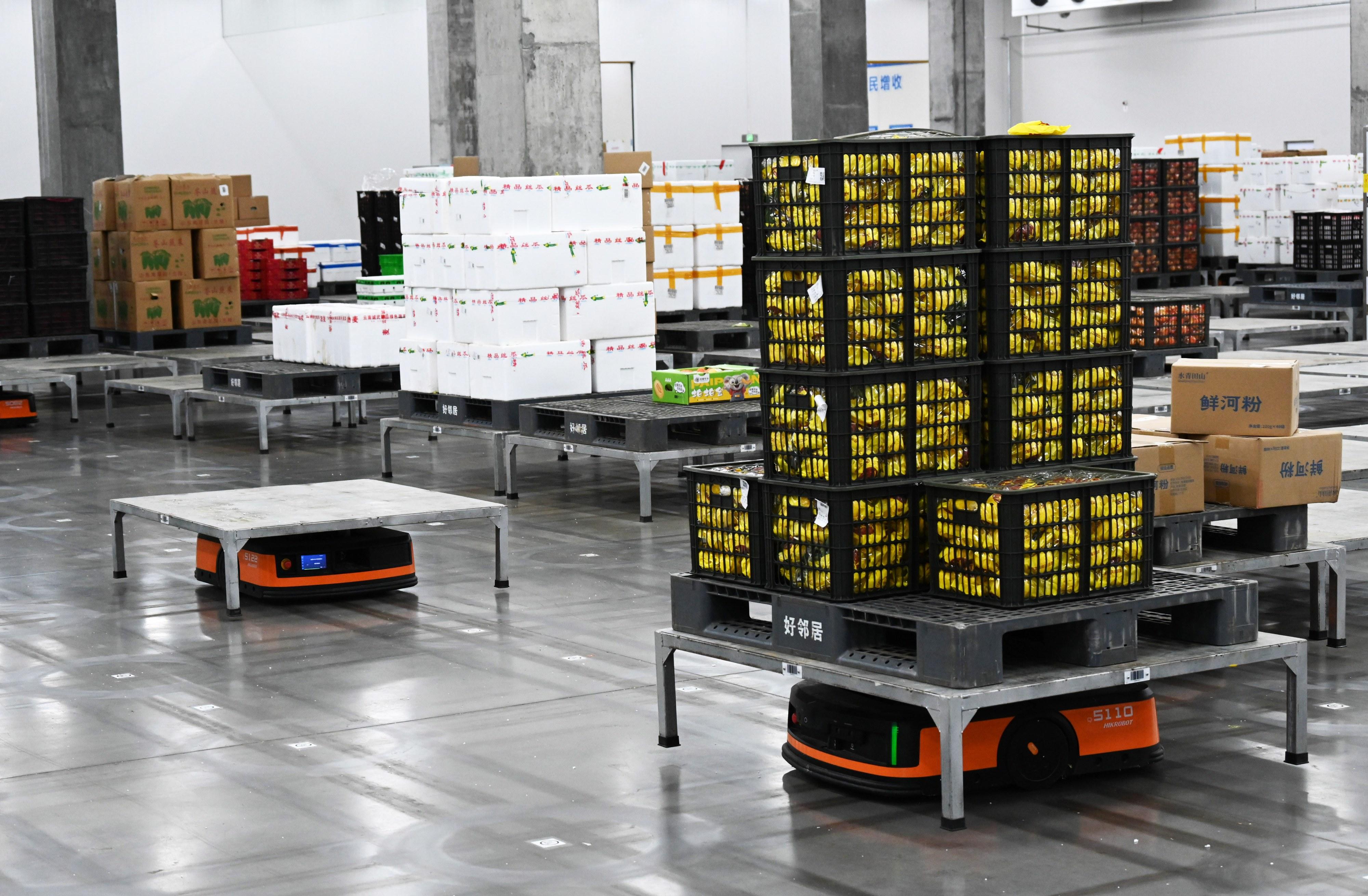
With global commerce having entered the digital age, China today is no longer just the world's factory — it is becoming the engine of next-generation logistics. In 2024, the Chinese postal industry handled over 175 billion parcels, marking a 21.5 percent year-on-year increase.
Smart logistics in China is no longer a vision. It is a functioning system, powered by AI, robotics, 5G networks and unmanned aerial vehicles (UAVs). It is changing how goods are moved — faster, safer and more sustainably — and in doing so, is setting a model for the rest of the world.
Automation transforms warehousing
Warehousing used to be a bottleneck in logistics, especially for large and irregular-sized goods. In Jimo district in port city Qingdao in east China, that constraint has been resolved. China's first smart unmanned warehouse for large items is now in full operation — handling goods from arrival to outbound delivery with minimal human involvement.
The facility uses a tightly integrated system of panoramic scanning stations, articulated robotic arms, and suction-based gantry robots, all controlled via real-time 5G communication. This setup allows automated handling of up to 24,000 bulky parcels daily, far exceeding the efficiency of traditional warehouses.
Autonomous guided vehicles move freely across the floor, using AI-powered navigation to avoid collisions and optimize their routes. Instead of requiring human workers to manually pick and transport goods across long aisles, the warehouse functions as a synchronized machine. Operational delays due to fatigue, misplacement, or human error have been drastically reduced.
The economic implications are also expanding. Labor-intensive warehousing — particularly for large-scale industrial or cross-border e-commerce goods — used to be inadequate in China's otherwise streamlined supply chain. But now this warehouse model will provide a scalable blueprint for future facilities in other regions or sectors such as appliance manufacturing, vehicle parts, or international transit hubs.
Ports steer national supply chains forward
While smart warehouses are improving internal logistics, it is at the ports that the impact of intelligent systems is globally visible. China's major container terminals — the Tianjin and Guangzhou (Nansha) ports as well as Shanghai's Yangshan Deep-Water Port —have high-level automation that is reshaping how global freight is handled.
At the Tianjin Port, a "5G+Smart Port" initiative integrates AI-based scheduling, autonomous vehicles, and real-time monitoring systems across quay cranes, yard cranes and inland transport units. This system reduces vessel turnaround time, enables dynamic resource reallocation, and limits the need for human operators in high-risk environments.
The Nansha Phase IV Terminal in Guangzhou represents a complete end-to-end automation chain: from unmanned container cranes to smart gate entry systems. It is using a new automated container terminal technology that moves from information systems to hardware for automation equipment. The idle time for containers has been significantly slashed by monitoring in-yard operations and equipment utilization.
Perhaps the most symbolic of them is the Yangshan Deep-Water Port, which now operates the world's largest single automated terminal, with a throughput capacity of over 6.3 million TEUs annually. Container loading, unloading, horizontal transportation, and stacking are all done without direct human engagement. This has not only improved consistency and safety but also insulated operations from workforce shortage and adverse weather.
These ports are showcasing a strategic shift in how China treats logistics infrastructure — not as a supporting actor in trade, but as a core national capability. The automation of these high-volume sites is helping ensure uninterrupted export flows and has secured China's position in global supply chains under increasingly volatile conditions.
Drones extend reach and balance access
Logistics innovation is not confined to megacities or ports. In rural and remote areas, where geographic barriers and low population density once made delivery costly and erratic, drones are now offering an efficient and scalable alternative.
In Longjing, a village in Zhejiang in east China, for instance, drones are used to transport high-value agricultural goods — such as fresh tea — from farms on steep terrain to nearby depots. What once required a 45-60 minute road trip is now completed in under 10 minutes by air. This has improved not only speed but also the freshness and market value of rural products.
In Shenzhen in south China, UAVs are being deployed for more critical work: the delivery of blood and medical supplies between hospitals. In emergencies, where even minutes become a matter of life and death, drones are bypassing road congestion to ensure timely delivery. The success of these medical drone routes has led to their expansion in other densely populated cities, forming part of a wider plan for urban-rural emergency logistics.
Logistical equity — the principle that rural areas should receive the same service level as urban centers — is no longer aspirational. It is being actively constructed through UAV-based infrastructure. Low-altitude logistics air routes for UAVs have been established in provinces such as Jiangxi, Sichuan and Guangxi, where mountainous terrain limits traditional road expansion.