Elite Chemical Science Journal Leads Peer-reviewed Research
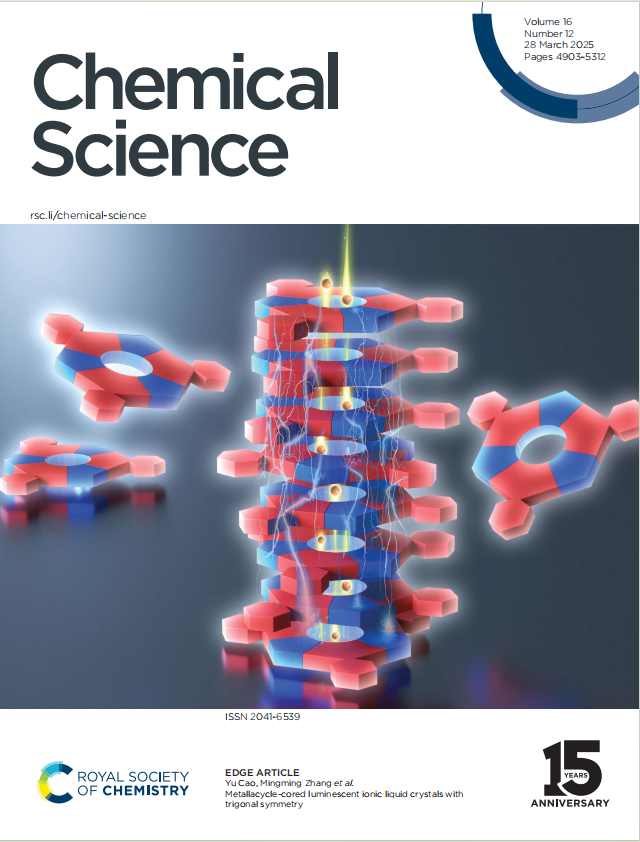
The year 2025 sees Chemical Science celebrating its 15th anniversary. While relatively new in the crowded landscape of well-established journals from commercial and society publishers, the Royal Society of Chemistry's Chemical Science has quickly established itself as a high-impact journal at the heart of a diverse, multidisciplinary research community.
At the forefront of the chemical sciences
The aim of Chemical Science is to be open and flexible to the needs of the global chemistry community, removing barriers where readers find them, and putting scientific understanding and investigation as the central purpose of the journal.
Chemical Science appreciates the value of fundamental research in supporting the development of discoveries that go on to have a wider impact, both on society and economically. This is something that founding editor-in-chief David MacMillan from Princeton University recognized was important for both the journal and research in general, as reflected in his pioneering work in organocatalysis, which won him the 2021 Nobel Prize in Chemistry.
We encourage speculative, high-risk research, especially papers that raise questions as well as answers. We're open to work that is in developing areas and that opens up interesting questions. As a broad-scope journal, we're not locked into a single sub-discipline, so we have a lot of flexibility.
Innovating scholarly publishing
The vision from Professor MacMillan was for the journal "to deliver a new and progressive format in which to publish leading edge research in chemistry and to become a top tier, high impact journal." Not only does Chemical Science publish high impact research across the breadth of the chemical sciences, it was the first journal to do away with traditional requirements for article length and formats.
Recognizing that there is no "one-size fits all format" across all sub-fields of chemistry, Chemical Science introduced the Edge article format, which allows not only the science and the authors to dictate the article's length but also the research to be more widely accessible to the larger Chemical Science audience. This unique Edge article format is something that our authors tell us they still really value about Chemical Science.
Building on the Edge article format, Chemical Science decided to take bolder steps led by the second editor-in-chief, Professor Daniel Nocera from Harvard University. In January 2015, Chemical Science became the first high-quality Diamond open access chemistry journal. This year is also special as it marks 10 years of Chemical Science being "free to read, free to publish" for anyone, anywhere. During this time, Chemical Science has published over 13,000 articles as open access, with authors from 88 countries and regions, and we have chosen to do this with no publication fees to our authors.
Making peer review more inclusive and transparent
Now, with myself as the third Editor-in-Chief of the journal, the most recent area of innovation for Chemical Science has been with our peer-review, where we can further promote open science practices. Trust is at the heart of scholarly publications and peer review is an established mechanism for deciding which articles make it through to publication.
However, confidence in peer review has been shaken recently, as witnessed by the increasing number of articles retracted due to fake or "rigged" peer review. This is why transparent peer review is now an option for our authors. By enabling readers to read the discussions between authors, reviewers and editors, we hope to provide an additional level of assurance in the peer review process. This will allow researchers to see how decisions have been reached, what information was used to inform that decision and, ultimately, why something was accepted. In this way, we hope to rebuild trust in peer review as a valuable and constructive part of the publication process.
Finally, as the flagship journal of one of the leading chemistry societies, Chemical Science can — through its commitments, innovations and initiatives — provide leadership and support for the community in adopting these open science practices, and ultimately promoting a positive research culture for everyone working in chemistry.
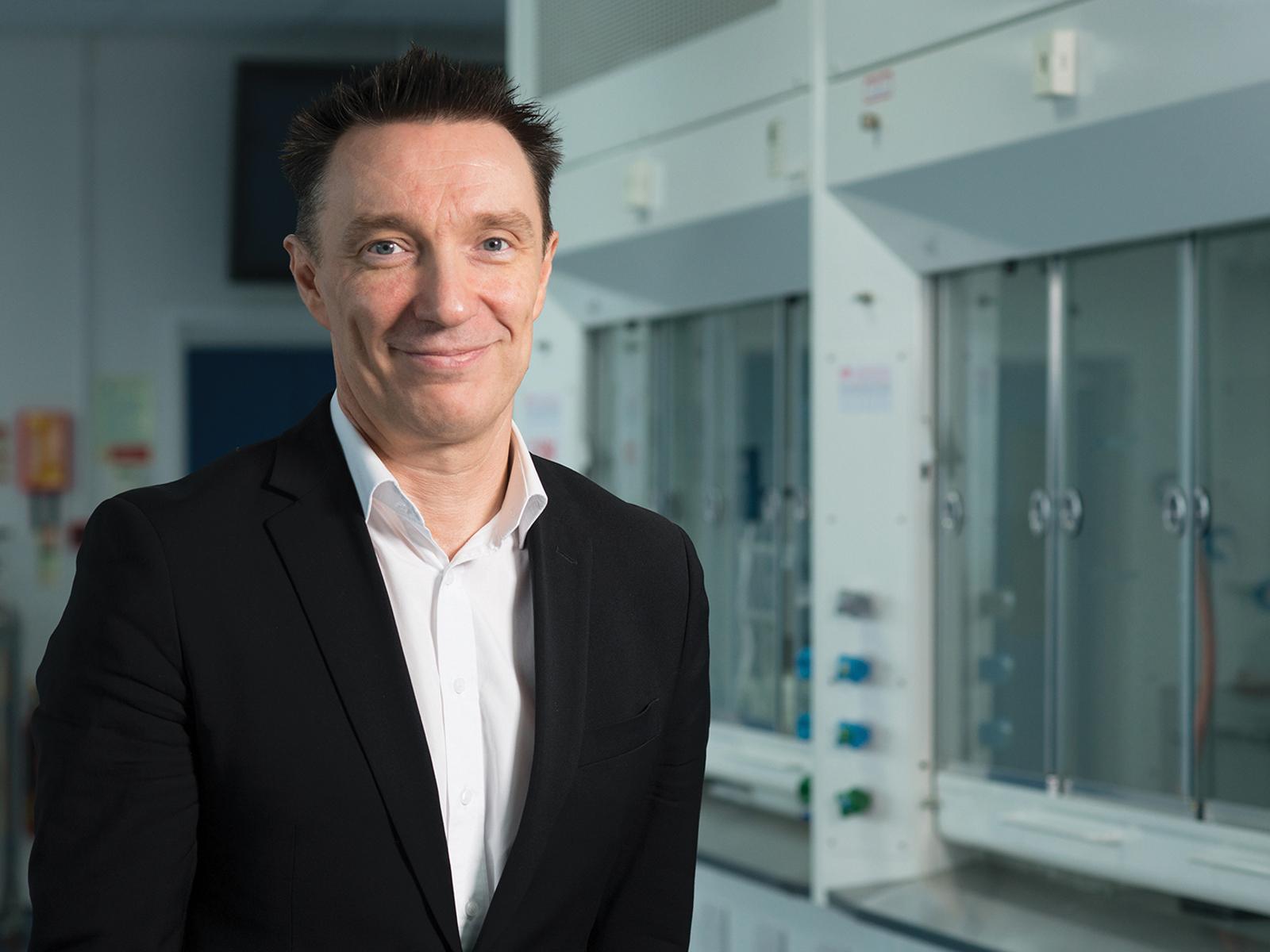
The article is contributed by Andrew Cooper. He is the editor-in-chief of Chemical Science, professor at the University of Liverpool, fellow of the Royal Society, and a foreign member of the Chinese Academy of Sciences.
Journal Review
I joined Chemical Science as one of the associate editors soon after the journal's launch, and I am very honored to have participated in and witnessed the journal's inception and evolution. Over the past 15 years, the journal has stuck to its core principles of being "open," "inclusive," and "innovative," establishing itself as a leading platform for publishing frontier research.
I particularly commend Chemical Science for transcending and redefining disciplinary boundaries. The journal explicitly champions interdisciplinary research and moreover, welcomes exploratory works that go "beyond the accepted bounds of the chemical sciences." Such openness cultivates groundbreaking discoveries.
The introduction of Edge articles, which eliminates the limits for the number of pages, has liberated authors from the constraints of manuscript length, enabling full articulation of intricate studies. Equally noteworthy is the journal's "free to read, free to publish" open-access model adopted in 2015, which removes financial barriers to publish — a policy that resonates strongly with today's global push for open science. Having been part of this endeavor, I firmly believe that the bold vision and courage exemplified by Chemical Science are vital catalysts for scientific progress.
—— Yu Jihong, an academician of the Chinese Academy of Sciences, currently at Beijing Normal University.