Advances in Controlled Nuclear Fusion for EAST
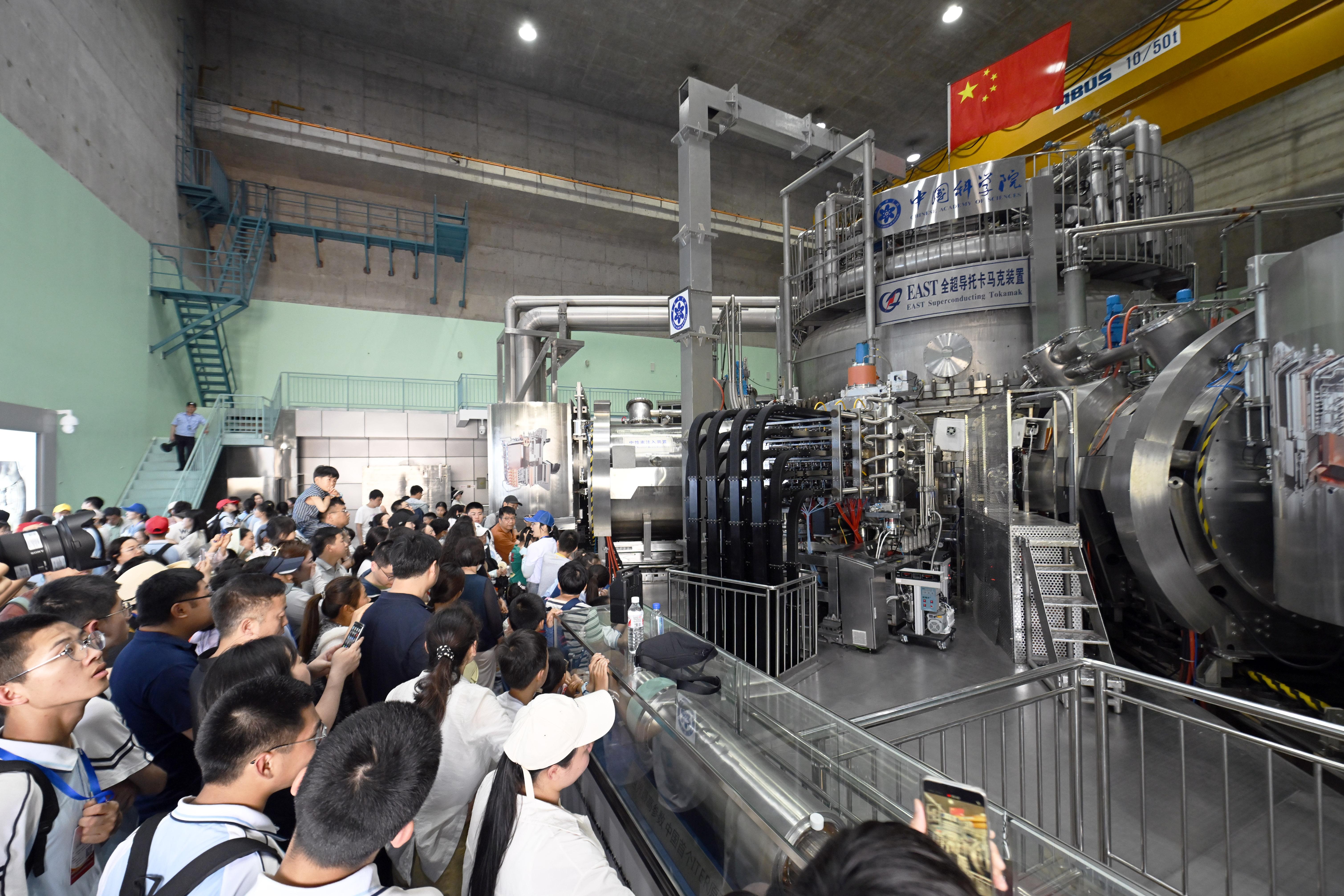
Scientists at the Institute of Plasma Physics, Chinese Academy of Sciences (ASIPP) in Hefei are pioneering the development of the Experimental Advanced Superconducting Tokamak (EAST), more commonly known as the "Chinese Artificial Sun." EAST has been central to China's quest to develop controlled nuclear fusion — a potential source of limitless, clean energy.
The lead scientist, Gong Xianzu, conducts numerous plasma discharge experiments daily, each one aiming to refine magnetic confinement fusion technology. This method mirrors the sun's energy-generating fusion reactions, where high temperatures and immense pressures force lighter nuclei, such as deuterium and tritium, to fuse and release vast amounts of energy.
Research on Kuafu facility
Maintaining a stable magnetic field to confine the heated plasma is a major challenge, as the plasma can reach temperatures above 100 million degrees Celsius — far hotter than the core of the sun. To address this, EAST employs powerful superconducting magnets within a vacuum chamber, a feat that ASIPP scientists compare to keeping a "mini sun" suspended in a "giant freezer," as the magnets require near-zero resistance at -269 degrees Celsius.
Since its initial plasma discharge in 2006, EAST has achieved several world records in sustained plasma confinement, with its latest accomplishment being a 403-second continuous high-confinement plasma pulse in 2023. These advancements not only underscore China's technical skill but also move global fusion energy research closer to practical application.
Building on EAST's success, China's next ambitious step in fusion research is the Kuafu facility, officially named the Comprehensive Research Facility for Fusion Technology (CRAFT). This state-of-the-art complex, also based in Hefei, is designed to develop key systems for the next generation of fusion reactors. Scheduled for completion by the end of 2025, CRAFT aims to become a central platform for researching materials, energy efficiency, and stability necessary for a fully operational fusion power plant. Key components of CRAFT, including a vacuum chamber made of interlocking "orange segments," serve as the foundation for high-temperature plasma studies and are essential for achieving the stability needed for energy generation.
Road toward commercial fusion power
The CRAFT facility, with contributions from over 170 domestic and international partners, is designed to solve engineering and scientific challenges related to long-duration plasma confinement, superconducting materials, and effective cooling systems. With extensive experimental platforms and innovative technical solutions, it is set to push the boundaries of fusion technology even further, laying the groundwork for a commercially viable fusion energy future.
The ultimate goal of China's fusion research is to move from experimental reactors like EAST, to fully operational fusion power plants. For this vision to become reality, fusion reactors need to meet two main criteria: sustainment and energy efficiency. Researchers must increase the plasma's confinement duration and ensure that the energy generated by fusion reactions exceeds the energy consumed — a metric known as the Q value. While current reactors struggle to reach a Q value above 1, China's target for commercial fusion energy production is a Q value above 30, which would make fusion an economically viable alternative energy source.
Widespread recognition
The "race" to commercial fusion is now a global endeavor, and China has garnered international recognition for its rapid advancements in the field. A recent article in Nature magazine highlights China's strategic approach to fusion development, from building research infrastructure to fostering a robust workforce of skilled engineers and scientists.
Beyond that, according to Dennis Whyte, a nuclear scientist from MIT, "China has built itself up from being a non-player 25 years ago to having world-class capabilities."
China is leading the world in realizing the ancient dream of "chasing the sun." As the nation's fusion scientists push forward, they embody the spirit of "Kuafu" — the mythical figure who pursued the sun in Chinese legend. Together with international counterparts, they continue to guide humanity closer to achieving sustainable, controlled nuclear fusion, a potentially transformative energy source for the future.